He boarded with a $20 ticket and a name that was not his. Hours later, the stranger had collected $200,000, strapped on a parachute and disappeared into the stormy night—leaving behind a mystery that remains unsolved more than five decades later.
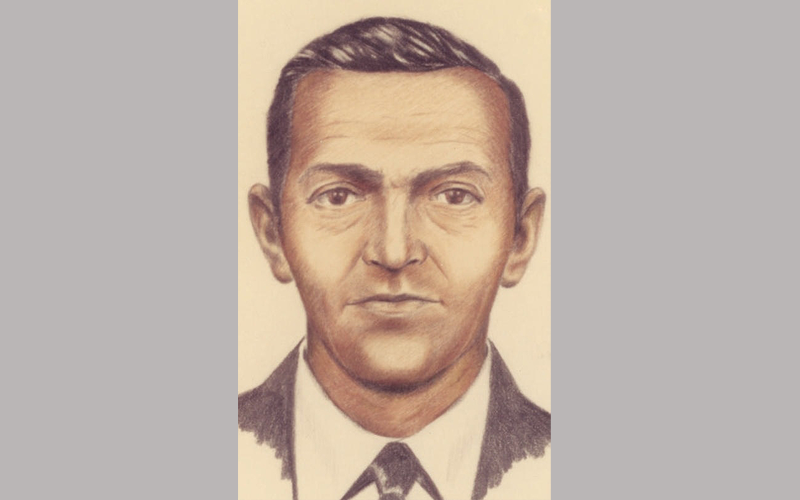
The Passenger Who Claimed He Had a Bomb
On November 24, 1971, a middle-aged man in a business suit boarded Northwest Orient Airlines Flight 305 from Portland, Oregon, to Seattle. He purchased his ticket under the name “Dan Cooper,” ordered a bourbon and soda, and soon handed a flight attendant a note claiming that he had a bomb in his briefcase.
According to the FBI’s official case history, the man displayed what appeared to be wires and red sticks before demanding $200,000 in $20 bills and four parachutes. Whether the device was a functioning bomb was never established.
The Ransom Exchange in Seattle
Authorities delivered the money and parachutes when the aircraft landed in Seattle. Cooper released all 36 passengers but ordered several crew members to remain aboard as the plane departed again, this time headed toward Mexico City.
A little after 8 p.m., somewhere between Seattle and Reno, Cooper lowered the Boeing 727’s rear stairway and jumped into the darkness with the ransom. The pilots landed safely in Reno, but neither Cooper nor his parachute was found.
His Famous Name Was a Mistake
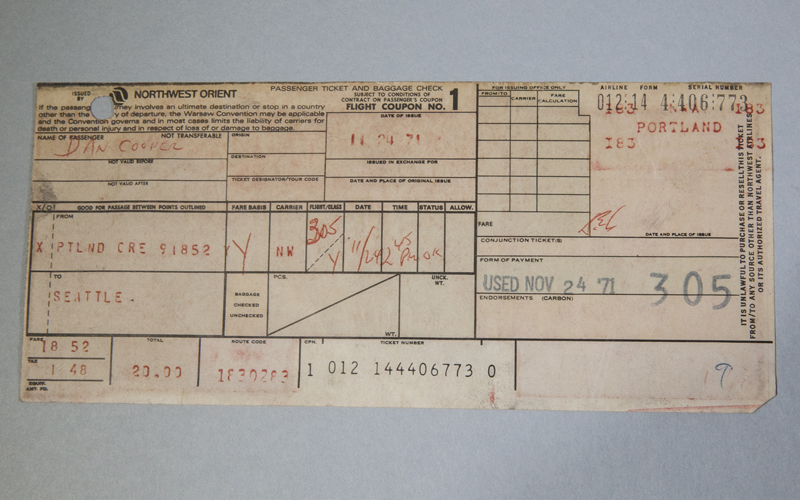
The hijacker called himself Dan Cooper—not D.B. Cooper. The initials apparently became attached to the case after reporters confused him with another man who had been questioned and quickly cleared.
The incorrect name endured, eventually becoming more famous than the alias written on the hijacker’s original airline ticket preserved by the FBI. His true identity has never been officially determined.
A Small Part of the Money Reappeared
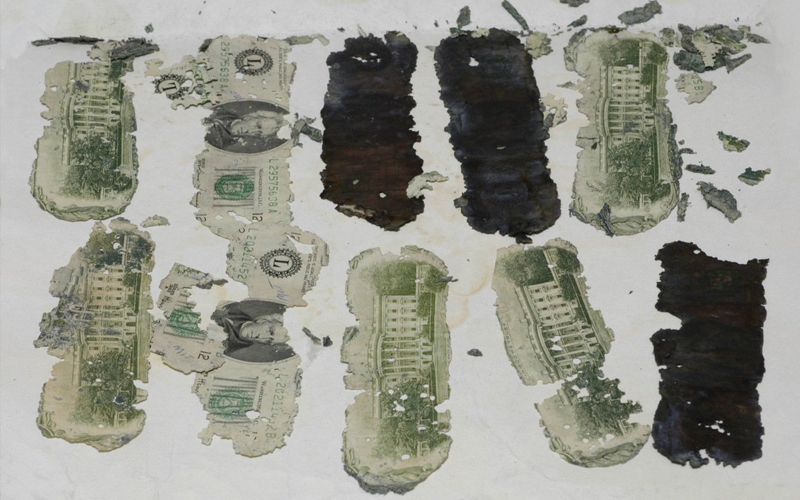
In 1980, a young boy discovered three deteriorating bundles of $20 bills near the Columbia River. The serial numbers matched Cooper’s ransom money, but the recovered cash totaled only $5,800.
The discovery proved that part of the ransom had reached the riverbank, but it did not reveal how it got there. None of the remaining money has produced evidence strong enough to identify the hijacker or establish whether he survived the jump.
Hundreds of Suspects, No Definitive Answer
The FBI named its investigation NORJAK, short for Northwest Hijacking, and examined more than 800 suspects during its first five years. Agents collected evidence from the aircraft, including Cooper’s black clip-on tie, but no forensic test or witness account produced a definitive identification.
One possibility considered by investigators is that Cooper died during the jump. He entered a wooded region at night wearing unsuitable clothing and using a parachute that could not be steered, but no body or confirmed remains were ever recovered.
The FBI Ended Its Active Investigation
In July 2016, the FBI announced that it was redirecting resources away from the case after 45 years. The agency said none of the numerous tips, suspects or investigative techniques had produced proof sufficient to identify the hijacker.
The FBI no longer actively investigates general theories, although it has asked anyone who discovers physical evidence specifically connected to the parachutes or ransom money to contact the agency. Despite recurring claims from private researchers, no person has been officially confirmed as Cooper.
A Mystery That Continues to Draw Viewers
The disappearance has inspired books, podcasts, television programs and generations of independent investigators. In 2022, the four-part Netflix documentary series D.B. Cooper: Where Are You?! revisited the hijacking, prominent suspects and the continuing search for an answer.
What happened aboard Flight 305 is documented. What happened after Cooper stepped from the aircraft—and whether he lived long enough to use any of the money—remains unknown.